
In a child’s earliest months and years, everyday moments create meaningful opportunities for growth. At The Elaine Clark Center, our Caterpillars room is designed to be a loving, nurturing place where our youngest learners can feel safe, supported, and ready to explore.
With responsive care, sensory experiences, play, and familiar routines, children begin building the foundational skills that support communication, movement, confidence, and connection. In the Caterpillars room, Ms. Shardaye and Ms. Rachel help make those moments count.
A Nurturing Start for Every Child
Infants and toddlers learn best when they feel secure. A warm smile, a familiar voice, a gentle transition from one activity to the next, and caregivers who notice their individual needs all help create that sense of safety.
For the youngest children, care and learning are inseparable. Feeding, diapering, comforting, resting, and playing are not interruptions to the day. They are the moments when trust grows. When children learn that their needs will be met with patience and consistency, they gain the confidence to look around, reach out, and engage with the world.
At The Elaine Clark Center, we value the relationships that make early learning possible. Ms. Shardaye and Ms. Rachel bring care, attention, and encouragement to each child while helping families feel connected to their child’s day.
Learning Through Sensory Exploration
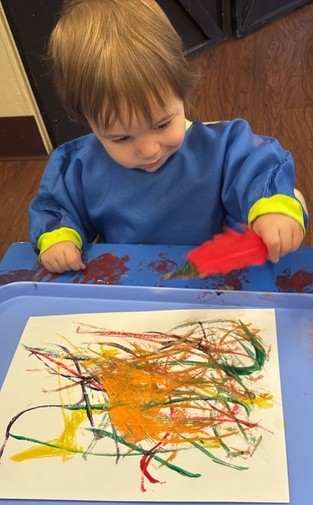
Young children are natural explorers. They learn through touch, sound, movement, sight, and interaction. A soft blanket, a colorful toy, a new texture, music during playtime, or the experience of crawling toward something interesting can all support discovery.
Sensory exploration gives children opportunities to notice cause and effect, practice focus, and express preferences. A child may learn that a toy makes a sound when it is shaken, that a textured object feels different from a smooth one, or that reaching toward a familiar caregiver leads to connection.
These experiences may look simple, but they are meaningful. They help children build awareness of their bodies and surroundings while encouraging curiosity in a supportive, developmentally appropriate setting.
Responsive Care Helps Children Communicate
Before children use words, they communicate in many other ways. They may smile, point, reach, make sounds, turn away, or look toward a person or object. Responsive caregivers pay attention to those cues and respond with warmth and consistency.
When a caregiver recognizes a child’s attempt to communicate, the child learns that their voice matters. A shared smile can become a back-and-forth exchange. Reaching for a favorite toy can become a chance to name an object, practice coordination, and celebrate effort. A moment of frustration can become an opportunity for reassurance and co-regulation.
In an inclusive early childhood program, this individualized attention is especially important. The Elaine Clark Center’s approach honors each child’s pace, strengths, and unique ways of engaging with others.
The Value of Familiar Daily Routines
Routines give young children a reassuring rhythm to their day. Arrival, meals, naps, diaper changes, playtime, and transitions all become easier to navigate when they happen with predictability and care.
Familiar routines also create repeated learning opportunities. A child may begin to anticipate what comes next, participate in a small step of the routine, or practice a new skill again and again. These moments can support independence, emotional security, and early problem-solving.
For children receiving disability services or developmental support, predictable routines can be especially helpful. They allow caregivers to build on what a child already knows while gently introducing new experiences. At The Elaine Clark Center, the goal is not to rush milestones. It is to create the conditions where children can grow and thrive in ways that are meaningful for them.
Celebrating Milestones Big and Small
Early development is full of important firsts, but growth does not always happen in a straight line. A new gesture, a successful transition, a longer period of engagement, or a child’s willingness to explore a new material can all be worth celebrating.
Ms. Shardaye and Ms. Rachel recognize that small successes matter. Their encouragement helps children feel capable and supported as they try new things. Their observations also help families share in the excitement of each child’s progress.
By celebrating effort as well as achievement, caregivers nurture a child’s confidence and curiosity. Children learn that it is okay to try, to pause, to try again, and to discover what they can do.
Strong Connections With Children and Families
Families know their children best, and meaningful early learning happens through partnership. When caregivers and families share observations, celebrate milestones, and communicate openly, children benefit from consistent support across home and school.
The Elaine Clark Center is proud to provide inclusive child development and early intervention services for families in Chamblee and across Metro Atlanta. Our community-centered approach recognizes that every child deserves opportunities to learn, belong, and build relationships.
We are grateful for the heart Ms. Shardaye and Ms. Rachel bring to the Caterpillars room each day. Their loving care helps our youngest learners begin their journeys with connection, comfort, and the joy of discovery.
FAQ
What do infants and toddlers learn through play?
Play supports early communication, movement, sensory awareness, problem-solving, and social connection. Even simple activities, such as reaching for a toy or exploring a new texture, can help children practice important developmental skills.
Why are routines important in early childhood education?
Consistent routines help young children feel safe and understand what to expect. They also offer repeated opportunities to practice skills, participate in daily activities, and develop confidence.
What does responsive care mean?
Responsive care means paying close attention to a child’s cues and responding with warmth, consistency, and support. It helps children build trust and learn that their needs and attempts to communicate are understood.
How does inclusive childcare support young children?
Inclusive childcare creates opportunities for children of all abilities to learn, play, and build relationships in a welcoming environment. Individualized support helps each child participate in ways that work for them.
What early childhood programs does The Elaine Clark Center offer?
The Elaine Clark Center offers inclusive child development for children from 6 weeks through age 4, along with early intervention, therapeutic support, and family-centered services designed to help children grow and thrive.
