At The Elaine Clark Center, we believe every student deserves time, space, and encouragement to explore what captures their attention. Sometimes that exploration begins with a favorite television show, a remarkable memory, and a box of sidewalk chalk. From there, it can become an opportunity for creativity, confidence, connection, and joy.
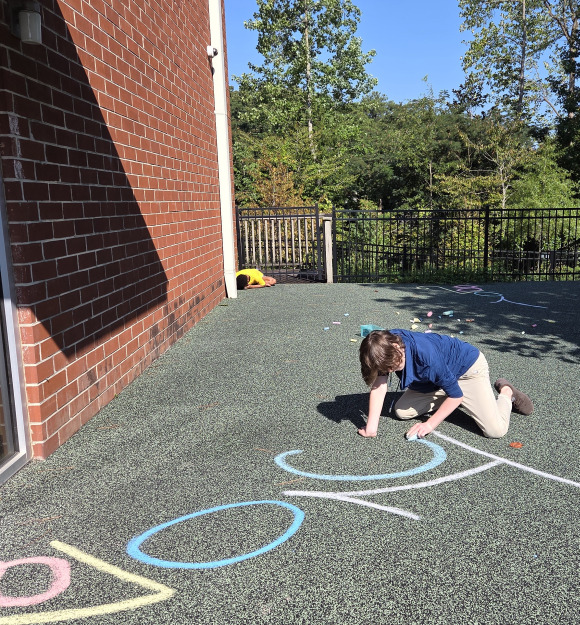
One of our students has an incredible memory for Family Feud. He can recall the Fast Money answers—the questions at the end of the show—as well as the scores that went with them. Then he takes those remembered numbers outside and recreates them in large, beautiful, looping script with sidewalk chalk. It is a remarkable combination of memory, creativity, and joy.
When an Interest Becomes an Opportunity
Every learner brings individual interests, abilities, and ways of seeing the world. A favorite game show may seem like a small detail at first, but for this student, it opens the door to something much bigger: recalling information, noticing patterns, practicing expression, and sharing a personal passion with others.
At The Elaine Clark Center, we value these moments because they remind us that learning does not always look one particular way. It may happen through a conversation, a familiar routine, a creative project, an outdoor activity, or an interest a student returns to again and again. When we pay attention to what matters to each person, we can help create experiences that feel meaningful and motivating.
Celebrating Memory, Expression, and Joy
There is something special about watching a student bring an idea from memory into the world. In this case, remembered Fast Money scores become bold chalk numbers across the pavement. The activity blends recall with artistic expression and transforms a personal interest into something visible, vibrant, and worth celebrating.
Those looping chalk designs are not simply numbers. They represent a student’s voice, attention to detail, and enthusiasm. They create a chance for others to see what he enjoys and what he can do. They also invite us to slow down, notice, and appreciate the many ways students communicate their strengths.
Moments like these can build confidence. When students are supported in pursuing an interest, they have opportunities to make choices, take pride in their work, and experience the satisfaction of sharing something meaningful. That sense of accomplishment can carry into other settings, relationships, and learning experiences.
Making Space for Individual Strengths
The Elaine Clark Center serves children and young adults of all abilities through individualized, family-centered programs. Across our inclusive child development, school-age, enrichment, and young adult programs, we recognize that growth is personal. Each student’s interests and strengths can offer valuable insight into how they learn, connect, and thrive.
Making room for individual strengths does not mean every activity has to follow a single plan. It means being present, curious, and responsive. It means noticing when a student lights up while talking about a favorite subject, enjoys creating something with their hands, or finds purpose in a repeated routine. These observations help us meet students where they are and support them as they build skills in ways that feel authentic to them.
For families seeking disability services for children in Metro Atlanta, this individualized approach matters. Students benefit when the adults around them see more than a diagnosis or a list of goals. They benefit when their interests, personality, communication style, and joy are part of the picture, too.
Why Creative Moments Matter
Creativity can be a powerful part of inclusive education. It offers students another way to explore ideas, make decisions, practice coordination, communicate preferences, and engage with the people around them. Creative experiences do not have to be complicated to be meaningful. A piece of chalk, a familiar memory, and an open space can become the ingredients for a memorable afternoon.
These moments also strengthen community. When students share what excites them, peers, educators, families, volunteers, and visitors get to know them more fully. We are reminded that every person has unique interests and gifts to contribute. The joy is not only in the finished creation; it is also in the connection that happens when someone is truly seen and celebrated.
At The Elaine Clark Center, we are grateful for opportunities to be alongside our students as they discover, create, and surprise us. Sometimes, we are simply along for the ride as they show us what they can do—and that is a privilege.
Come See What Our Community Can Do
This student’s sidewalk-chalk art is one of many meaningful moments happening throughout our community. Every day, students bring their curiosity, humor, persistence, creativity, and individuality into our programs. Their accomplishments may take many forms, from a new skill practiced with determination to a joyful project inspired by a favorite interest.
We invite families, donors, volunteers, and community advocates to come along with us as we share more of the amazing things the folks at The Elaine Clark Center can do. By celebrating students as whole people and supporting programs designed around their needs and strengths, we can help create a more inclusive community for children and young adults with developmental disabilities.
FAQ
Why is it important to encourage a student’s interests?
Personal interests can create meaningful opportunities for engagement, communication, confidence, creativity, and skill-building. They also help educators and caregivers understand what motivates each student.
How does creativity support students with developmental disabilities?
Creative activities can offer flexible ways to express ideas, make choices, explore materials, connect with others, and take pride in accomplishments. The right activity will look different for every student.
What programs does The Elaine Clark Center offer?
The Elaine Clark Center provides inclusive child development, early intervention, out-of-school enrichment, K–12 special education through Heart of Hope Academy, young adult life-skills programming through ECC Life, therapeutic intervention, pediatric nursing, social services, and scholarships.
How can the community support students at The Elaine Clark Center?
Community members can support our work by sharing our story, volunteering, partnering with us, and making a gift that helps sustain inclusive programs and services for children, young adults, and families.
