Creative play gives children a powerful way to communicate, explore, and belong. Whether it happens with sidewalk chalk, paint, music, movement, or imaginative games, the process matters just as much as the finished creation. At The Elaine Clark Center, we celebrate the many ways children and young adults can express themselves, build confidence, and make the world a more colorful place.
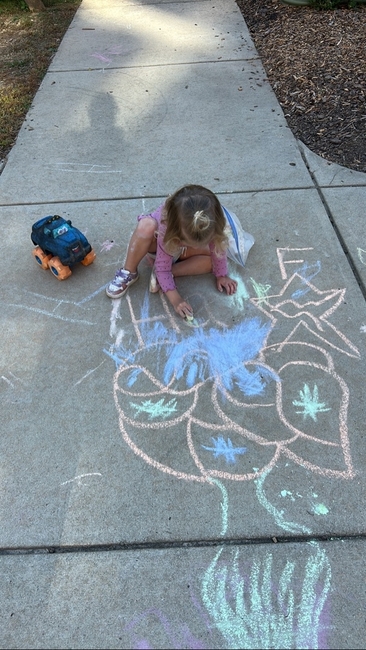
A sidewalk, a handful of colorful chalk, and a whole lot of imagination can become an invitation to create. For a child, that moment may be about drawing a bright picture—but it can also be about practicing choices, sharing space, trying something new, and proudly saying, “I made this.”
Creativity Makes Room for Every Voice
There is no single “right” way to create art. That is one of the reasons creative activities can be so meaningful for children with developmental disabilities. A child may use broad strokes, tiny marks, favorite colors, adaptive tools, or a unique approach that reflects exactly who they are.
At The Elaine Clark Center, inclusive learning means recognizing each child’s strengths and interests. Creative opportunities help children participate in ways that feel accessible, joyful, and personal. They can communicate an idea without needing to find the perfect words, and they can experience the pride that comes from bringing an idea to life.
Small Moments Can Support Big Skills
Art and imaginative play are fun, but they can also support important developmental skills. Holding chalk, selecting colors, drawing shapes, and working on a shared project can encourage fine-motor development, hand-eye coordination, attention, and planning.
Just as importantly, creative activities can invite social connection. Children may take turns with materials, notice one another’s work, offer encouragement, or collaborate on a larger drawing. These natural interactions create meaningful chances to practice communication and relationship-building in a low-pressure setting.
Building Confidence Through Choice
When children are given choices, they learn that their preferences matter. Choosing a color, deciding where to draw, or selecting what to create can be a meaningful exercise in independence. Even a simple question—“What would you like to make today?”—can open the door to self-expression.
For families seeking disability services for children in Metro Atlanta, it is helpful to look for programs that support the whole child. Confidence grows when children are seen, heard, and encouraged to participate in activities that reflect their interests. The Elaine Clark Center’s family-centered approach values those everyday moments of growth.
Connection Beyond the Classroom
Creative play does not have to be complicated or expensive. Sidewalk chalk, paper, recycled materials, stickers, music, or a favorite book can all inspire connection at home and in the community. The goal is not a perfect project. The goal is creating space for curiosity, exploration, and shared joy.
Families can make creativity part of everyday routines by setting out a few materials, following a child’s lead, and celebrating effort. Try drawing together outside, making a collage from magazine clippings, acting out a favorite story, or creating a simple “gallery” to display finished work. These experiences send a clear message: your ideas are worth sharing.
An Inclusive Environment Helps Children Thrive
An inclusive childcare center does more than welcome children into the same room. It creates opportunities for every child to participate meaningfully, with individualized support when needed. That can include adapting materials, offering sensory-friendly choices, building in extra time, or encouraging communication in the ways that work best for each child.
The Elaine Clark Center has supported children and young adults of all abilities since 1969. Through inclusive child development, therapeutic intervention, specialized education, enrichment, and life-skills programs, we work to help individuals grow in confidence and connection across every stage of life.
Celebrating the Artists Among Us
Every child has something to share with the world. Sometimes that looks like a colorful chalk drawing on a sidewalk. Sometimes it looks like a new way of solving a problem, a favorite song sung with enthusiasm, or a handmade gift for someone they love.
When we pause to notice those moments, we honor the creativity, personality, and potential of each individual. We also help build a more inclusive community—one that recognizes that every person deserves opportunities to learn, contribute, and shine.
At The Elaine Clark Center, our artists remind us every day that imagination has no limits. Their creations bring color to our spaces, joy to our community, and a meaningful reminder that every voice matters.
FAQ
Why is creative play important for children with developmental disabilities?
Creative play can support self-expression, communication, fine-motor development, confidence, and social interaction. It also gives children a flexible, enjoyable way to participate according to their individual strengths and needs.
What are easy creative activities to try at home?
Families can try sidewalk chalk, coloring, painting, collage-making, music, dance, sensory bins, or storytelling with props. Start simple and let the child choose materials or guide the activity whenever possible.
How can an activity be adapted for a child’s needs?
Adaptations may include larger crayons or paintbrushes, easy-grip tools, visual examples, fewer steps, extra time, sensory-friendly materials, or a quieter space. The most helpful adaptation is the one that allows the child to participate comfortably and successfully.
What does inclusive early learning look like?
Inclusive early learning creates a supportive environment where children of differing abilities can learn, play, and build relationships together. It includes individualized support, responsive teaching, and meaningful opportunities for every child to engage.
How can I support The Elaine Clark Center?
Community members can support The Elaine Clark Center by donating, volunteering, joining the Clark Crew, sharing our mission, or helping connect families to our programs. Every act of support helps expand opportunities for children and young adults with disabilities in the Atlanta area.
