
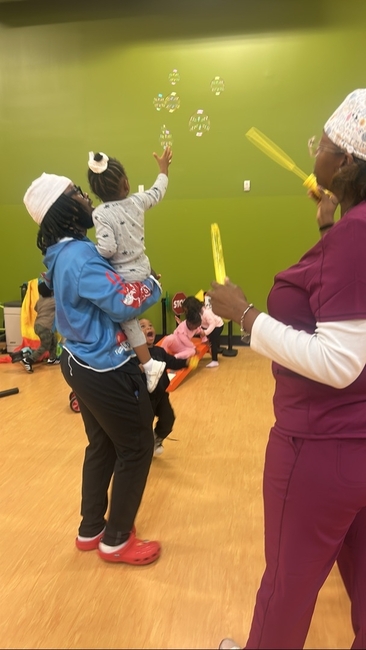
At The Elaine Clark Center, a simple bubble can become something much bigger: a moment of joy, connection, creativity, and learning. While International Bubble Day is celebrated in May, our enthusiasm for bubbles is not limited to one day. Throughout the year, our children and young adults find countless ways to turn bubble blowing into an art.
For many people, bubbles bring back happy memories of playtime. At ECC, they can also create meaningful opportunities for communication, movement, sensory exploration, and shared laughter. Whether someone is reaching for a floating bubble, watching colors shimmer in the light, or proudly creating a stream of bubbles with support from a teacher or therapist, those small moments can be powerful.
A Simple Activity With So Many Possibilities
Bubbles are wonderfully flexible. They can be part of an outdoor activity, a calming sensory break, a classroom celebration, or a playful way to encourage interaction. There is no single “right” way to enjoy them, which makes bubbles especially welcoming for people with different abilities, interests, and ways of engaging with the world.
At The Elaine Clark Center, we celebrate activities that invite each participant to join in at their own pace. One child may love chasing bubbles across the playground. Another may prefer watching them drift through the air. Someone else may enjoy choosing a wand, helping twist open a bottle, or taking a turn blowing bubbles for friends. Every response is worth celebrating.
Encouraging Communication and Connection
A bubble activity naturally creates reasons to connect. A child might gesture for “more,” make eye contact with a teacher, use a communication device, or share a smile when a bubble lands nearby. These interactions may seem small, but they can help build trust and encourage meaningful communication.
For children participating in inclusive childcare, early intervention, or out-of-school programs, playful experiences can make it easier to practice social skills without pressure. Taking turns, waiting briefly, making a choice, and celebrating a friend’s success can all happen around a bottle of bubble solution.
Families know that progress does not always arrive in a big, dramatic moment. Often, it grows through repeated opportunities to feel safe, seen, and encouraged. Bubbles can help create those opportunities in a way that feels fun and natural.
Supporting Movement and Coordination
Watching, reaching, popping, and blowing bubbles can encourage movement in many forms. Children can stretch upward, track bubbles with their eyes, practice grasping a wand, or move across a space to pop bubbles as they float away. These playful motions can support coordination while keeping the focus on enjoyment.
At ECC, individualized support helps make activities accessible. A teacher, therapist, or caregiver may adapt how an activity is offered so that each participant can take part in a meaningful way. That could mean using a larger bubble wand, offering hand-over-hand support, giving extra time, or simply finding the bubble activity that sparks the most excitement.
A Sensory Experience Made for Wonder
Bubbles can be a gentle, engaging sensory experience. Their movement is slow enough to watch, their shapes change quickly, and their reflective surfaces can catch the light in surprising ways. For some children and young adults, this kind of visual experience can be especially captivating and calming.
Of course, every person experiences sensory input differently. The Elaine Clark Center’s family-centered approach recognizes those individual preferences. Some participants may want to be right in the middle of the action, while others may enjoy observing from a little farther away. By honoring those choices, we help create a welcoming environment where everyone can participate comfortably.
Creativity Is Part of the Fun
Turning bubble blowing into an art is about more than making the biggest bubble possible. It is about imagination. It is about trying a new wand, noticing how the wind changes a bubble’s path, creating a bubble-filled dance party, or seeing who can make the room laugh the hardest.
Creative play gives children and young adults a chance to express themselves. It also reminds all of us that learning can be joyful. At The Elaine Clark Center, our programs are designed to support growth while honoring the whole person—their strengths, preferences, personality, and potential.
Joy Belongs in Every Day
International Bubble Day may come around once a year, but the spirit behind it belongs in every season. Joy is not an extra. It is part of belonging, confidence, connection, and quality of life.
For more than five decades, The Elaine Clark Center has supported children and young adults of all abilities through inclusive learning, individualized care, therapeutic support, and community-centered programs in Chamblee and across Metro Atlanta. Moments of play, like a burst of bubbles on an ordinary day, are one of the many ways we build relationships and celebrate each person’s unique gifts.
So, if you see bubbles floating through the air at ECC, know that there may be more happening than meets the eye. There may be a new skill in progress, a friendship forming, a confident choice being made, or a joyful memory taking shape.
FAQ
Why are bubbles a helpful activity for children with disabilities?
Bubbles can encourage communication, movement, visual attention, turn-taking, and sensory exploration in a playful, low-pressure setting. The activity can also be adapted to meet an individual child’s needs and preferences.
Does The Elaine Clark Center offer inclusive programs for young children?
Yes. The Elaine Clark Center provides inclusive child development and early learning opportunities for young children, with individualized support and therapy-integrated care for children of all abilities.
What kinds of programs does ECC offer beyond early childhood?
ECC supports children and young adults through out-of-school enrichment, Heart of Hope Academy for K–12 students, and ECC Life for young adults ages 22–30, along with therapeutic intervention, pediatric nursing, social services, and scholarships.
How can families learn more about programs at The Elaine Clark Center?
Families can visit The Elaine Clark Center website
to explore programs and learn more about inclusive support for children and young adults with developmental disabilities.
How can the community support ECC?
Community members can support The Elaine Clark Center by donating, volunteering, sharing our mission, and helping more families learn about disability services for children and young adults in Metro Atlanta.
